UCL Racing's Mars Rover team developed an airless flexible wheel for the European Rover Challenge, competing on a simulated Martian surface. With Xometry's SLS 3D printing and engineering feedback, they produced six wheels from EOS TPU 1301 (Shore 86A) with a radial honeycomb lattice structure. The final design meets 220mm diameter and 120N load requirements, featuring symmetric tread pattern and integrated motor mount.
Industry
Aerospace
Country

United Kingdom
Use case
Prototyping
Technology
3D Printing
Materials
EOS TPU 1301 (Shore 86A)
Product
Mars rover wheel
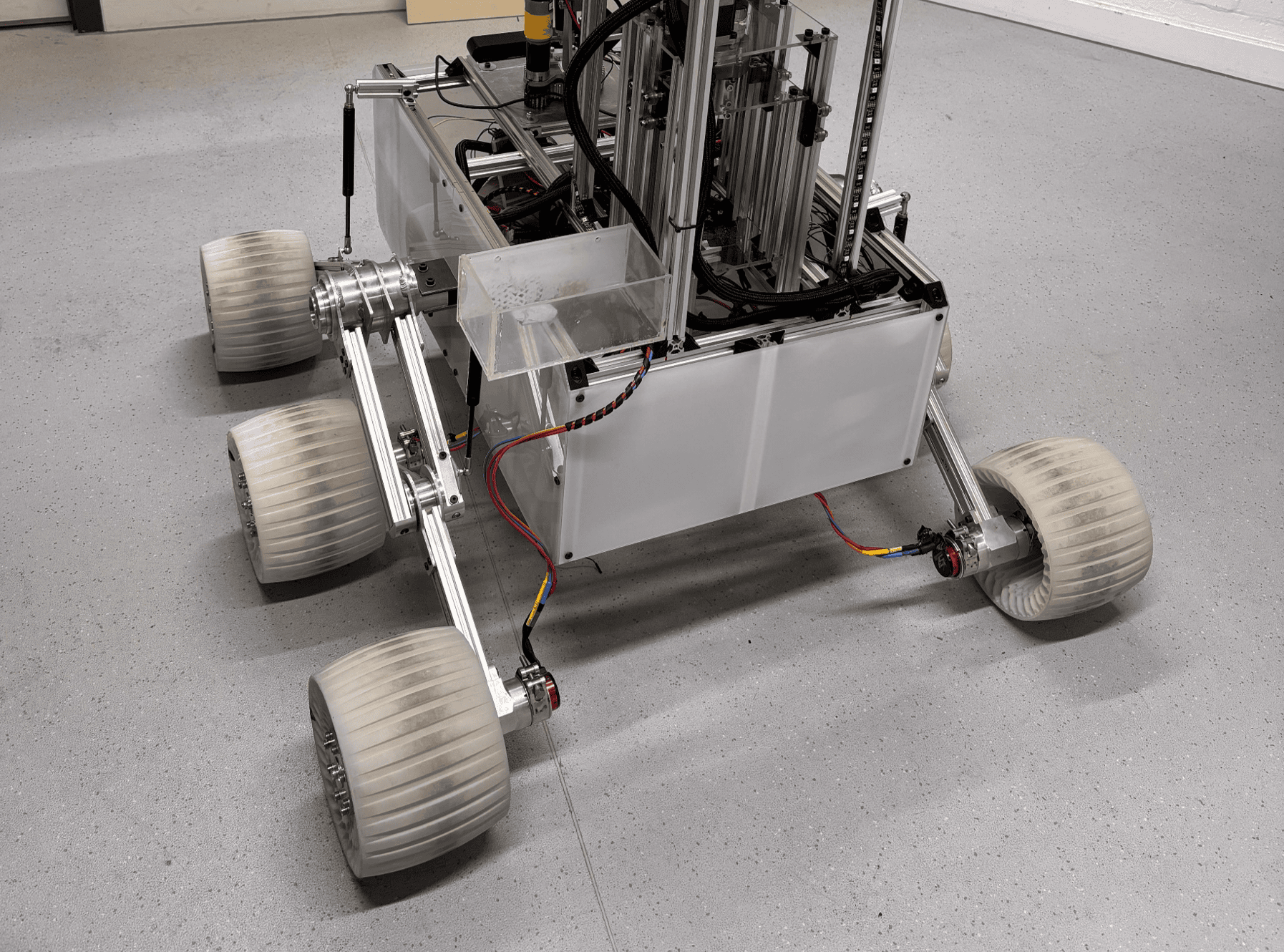
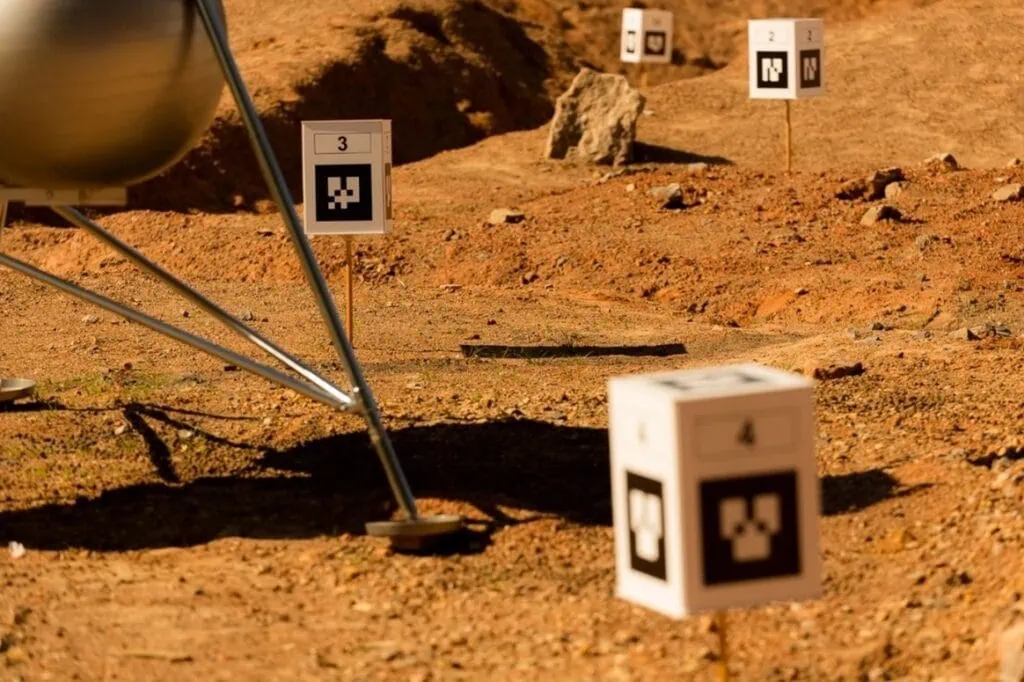
Hello, I’m Zhiqi Cai, a Mechanical Engineering student at University College London and a former member of UCL Racing’s Mars Rover team. The team is preparing to compete in the 2025 European Rover Challenge (ERC), where teams are tasked with designing a rover capable of performing autonomous missions on a simulated Martian surface—the ERC Mars Yard.
One of the major hurdles in our project was mobility: how to build a reliable, puncture-proof wheel that could handle rocks, slopes, and sand while staying within strict constraints on weight and size.
Instead of relying on pneumatic tyres, which are prone to failure in rugged environments, we set out to develop a fully airless, flexible wheel—capable of passive damping, lightweight, and manufacturable via additive techniques. The project turned out to be far more than just a component design: it became a case study in engineering decision-making, design iteration, and real-world manufacturing collaboration.
Three Concepts, Three Philosophies
We began by developing three distinct design concepts, each exploring different structural strategies and material combinations. To meet competition constraints—a maximum wheel diameter of 220 mm and the ability to withstand a vertical load of 120 N—we evaluated each concept through detailed CAD modeling and finite element analysis (FEA). Performance was assessed based on safety factor, weight, manufacturability, and how the structure deformed under load.
| Concept | 1. Rigid core + flexible outer layer | 2. Single-piece honeycomb | 3. Modular assembly with locking teeth |
|---|---|---|---|
| Description | This design combined an ABS core with a TPU outer layer, connected via an interference fit—like a conventional tyre on a rim. | A one-material, one-piece TPU design using a hexagonal honeycomb structure for uniform strength and reduced mass. | Also dual-material (TPU + ABS), but with the outer layer attached to the core via interlocking teeth—allowing easier servicing. |
| Mass | 1.290 kg | 1.095 kg | 1.043 kg |
| Effective safety factor | 7.5 (with a conservative assumption of 0.5x applied to printed parts) | 6.79 | 6.22 |
| Advantage/drawback | Localized stress and potential tearing at the press-fit interface. | Simplified manufacturing, robust load distribution, better deformation control. | Uneven deformation patterns and stress concentration risks from sharp edges. |
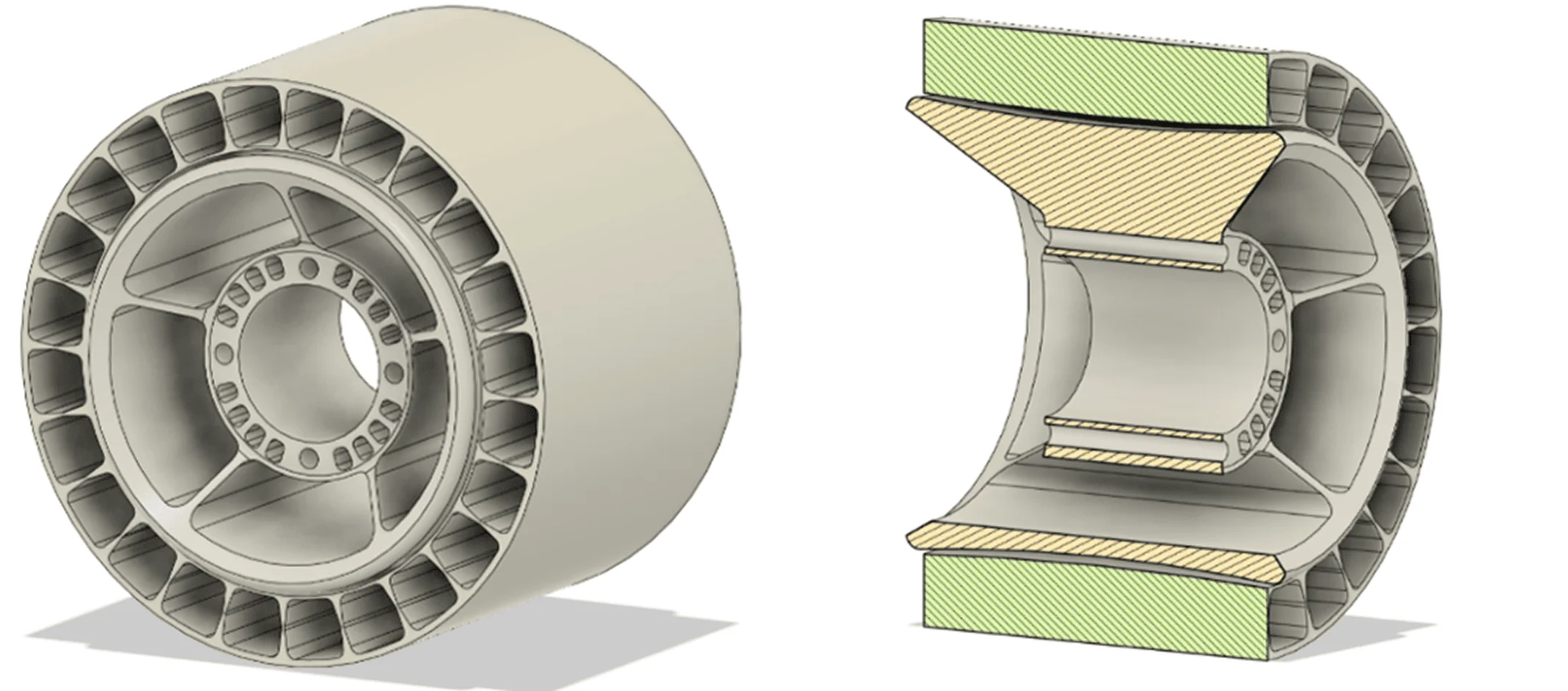
Concept 1 CAD (left) and cross-section analysis of Concept 1 (right)pac
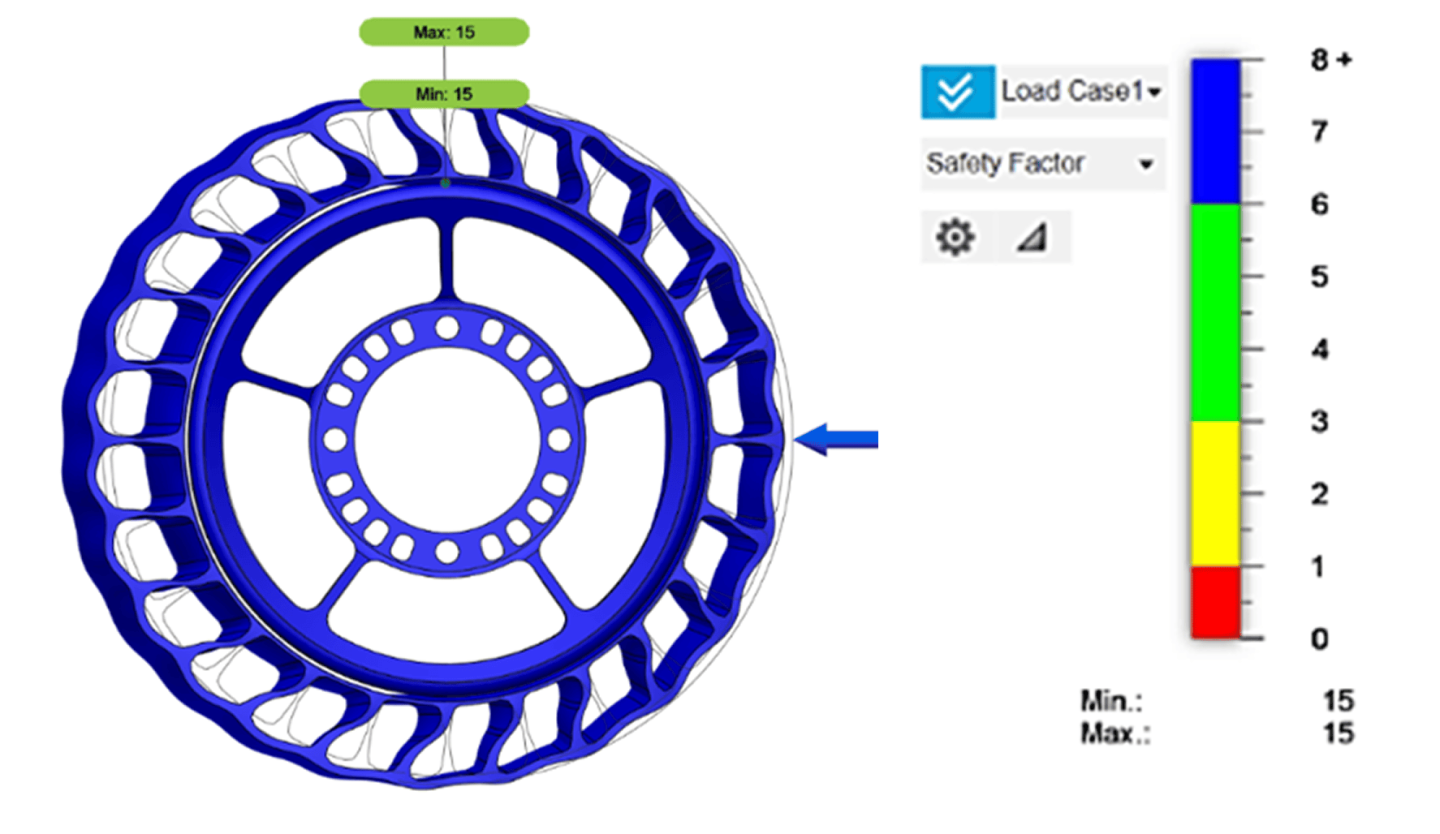
FEA study of Concept 1e
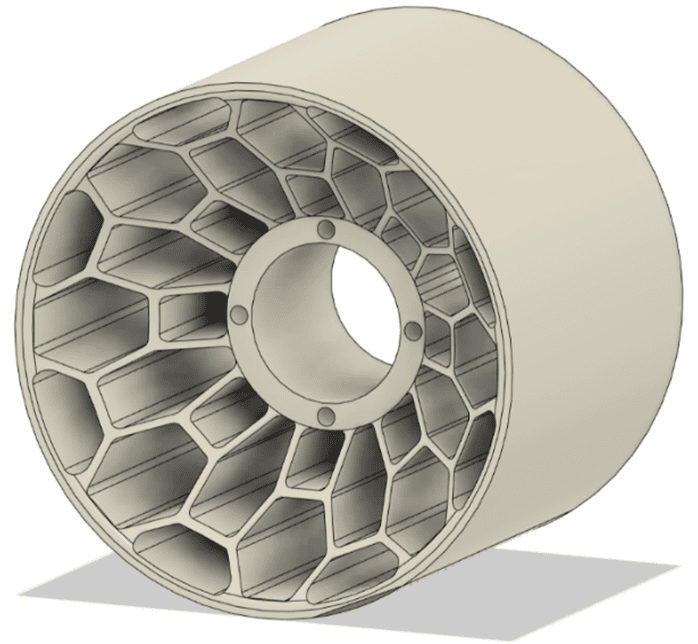
Concept 2 CADmr
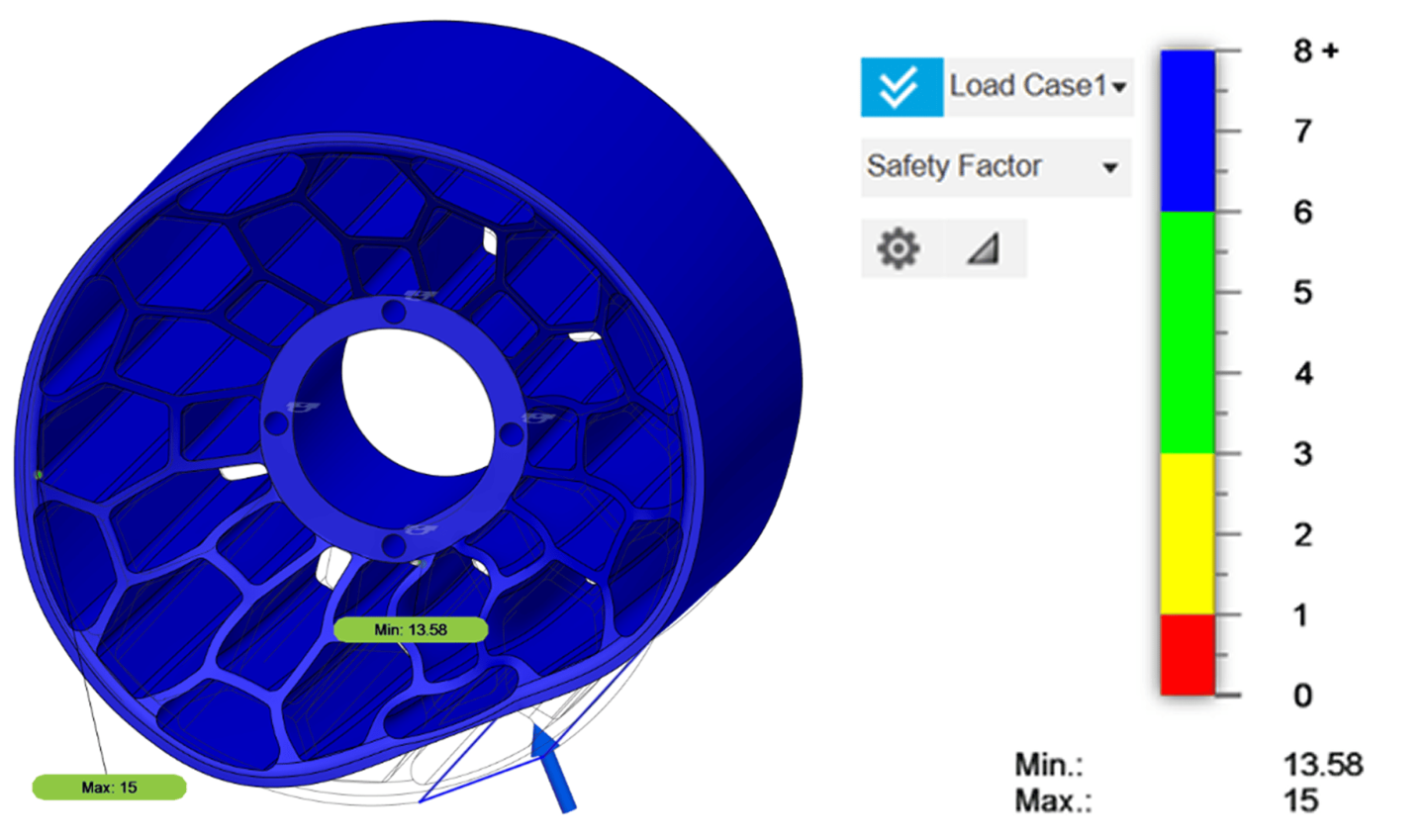
FEA study of Concept 2
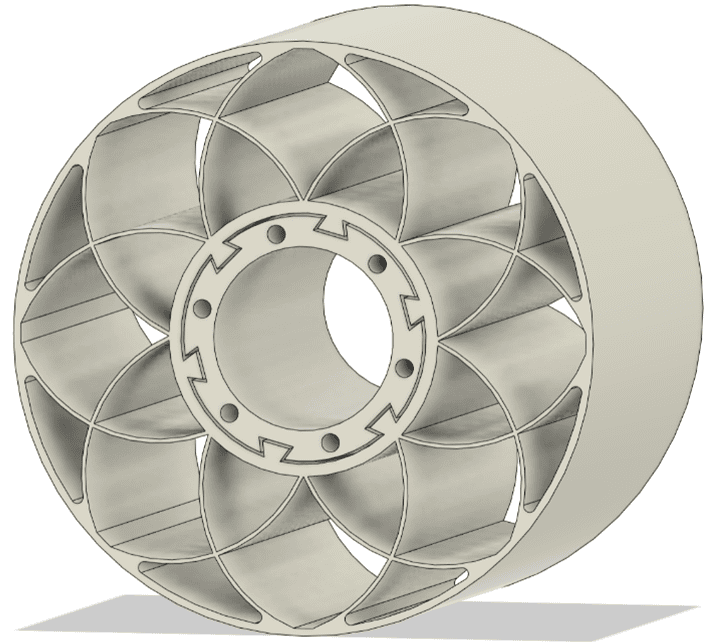
Concept 3 CAD
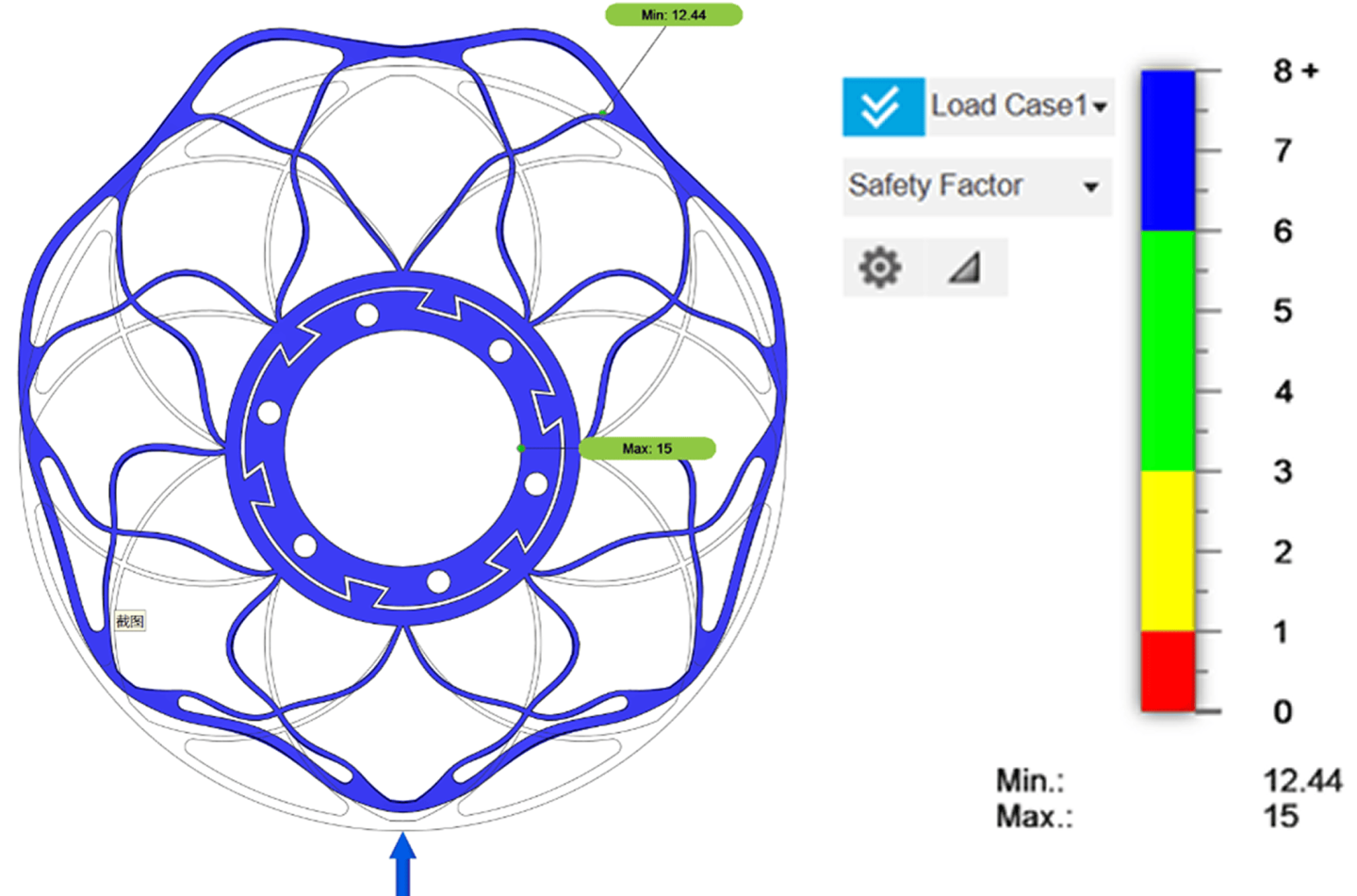
FEA study of Concept
After benchmarking the options through a weighted decision matrix, we selected Concept 2 for further development. Its superior manufacturability and consistent structural response made it the best candidate. The clean, single-material design also aligned well with additive manufacturing methods, and we validated its feasibility early on using Xometry’s Instant Quoting Engine.
From Preliminary Specs to Final CAD
With Concept 2 selected, we refined the design to meet a series of strict functional requirements:
- Max wheel diameter: 220 mm
- Load capacity: 120 N
- Motor interface: recessed cavity to minimize moment arm
- Texture: tread for traction
- Coverage: partial dust covers to block debris
- Flexibility: elastic deformation for damping
- Single-piece manufacturing to minimize failure points.
The resulting CAD integrated a full enclosure for the motor shaft, preserving the honeycomb core for strength and incorporating a textured tread for grip on both flat and inclined surfaces.
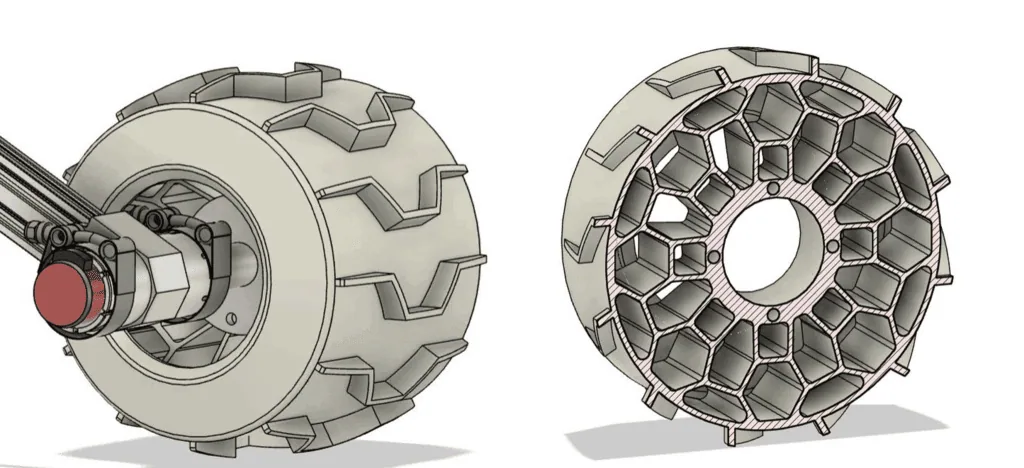
Preliminary design CAD (left) and cross-section analysis of the preliminary design (right)
To validate our approach and select final manufacturing parameters, we reached out to Xometry engineers for a professional design review. Their feedback pushed the project to the next level:
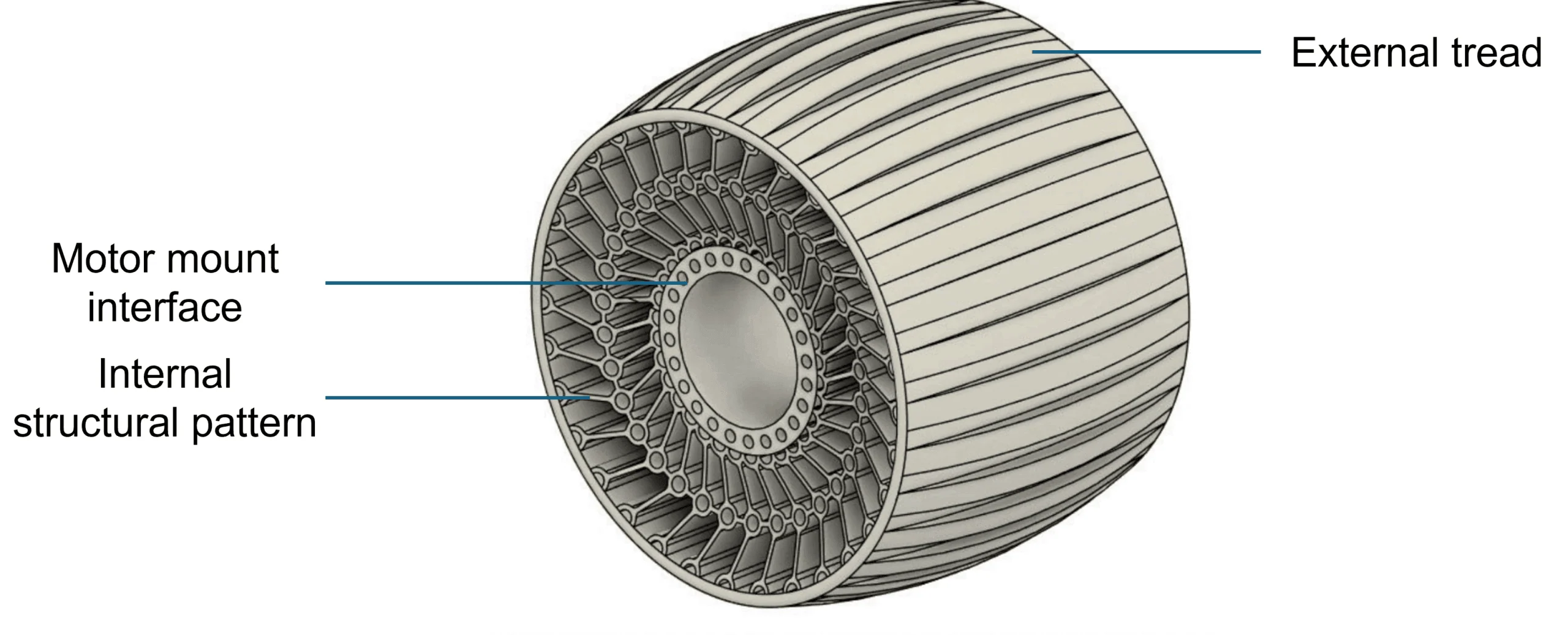
- Revised lattice: Our initial design showed uneven deformation around the circumference. Engineers recommended a more symmetric, radial internal strut layout, inspired by Michelin’s Uptis prototype.
- Dust cover removal: Partial covers risked trapping fine dust and gravel. A fully open design would eliminate that and improve aesthetics.
- Tread optimization: We lowered tread height and switched to a symmetric pattern to support bi-directional driving and reduce wear.
- Material hardness tuning: Shore A >70 was advised to balance softness and structural support. EOS TPU 1301 (Shore 86A) was the final pick—ideal for impact damping, UV-resistant, and compatible with Selective Laser Sintering (SLS).
All this feedback was incorporated into our final CAD, which featured a uniform internal lattice, motor mount integration, and a symmetric tread pattern. The partial dust cover was dropped altogether.
Manufacturing, Delivery, and Integration
With the final design ready, we uploaded it to Xometry’s platform for a second quote. TPU 1301 wasn’t listed in the dropdown at the time, so we selected “TPU” and specified the exact material in the order comments. Thanks to Xometry’s 80% sponsorship, we were able to manufacture all six wheels within our student budget.
When the printed wheels arrived in February, the quality was exceptional. The SLS process delivered the dimensional accuracy we needed, and the parts exhibited excellent flexibility without visible defects. After successful flexure testing, we mounted the wheels on the rover chassis. The integration was seamless—the offset cavity locked into the motor shaft perfectly, and the honeycomb structure provided the shock absorption we had modeled from the start.
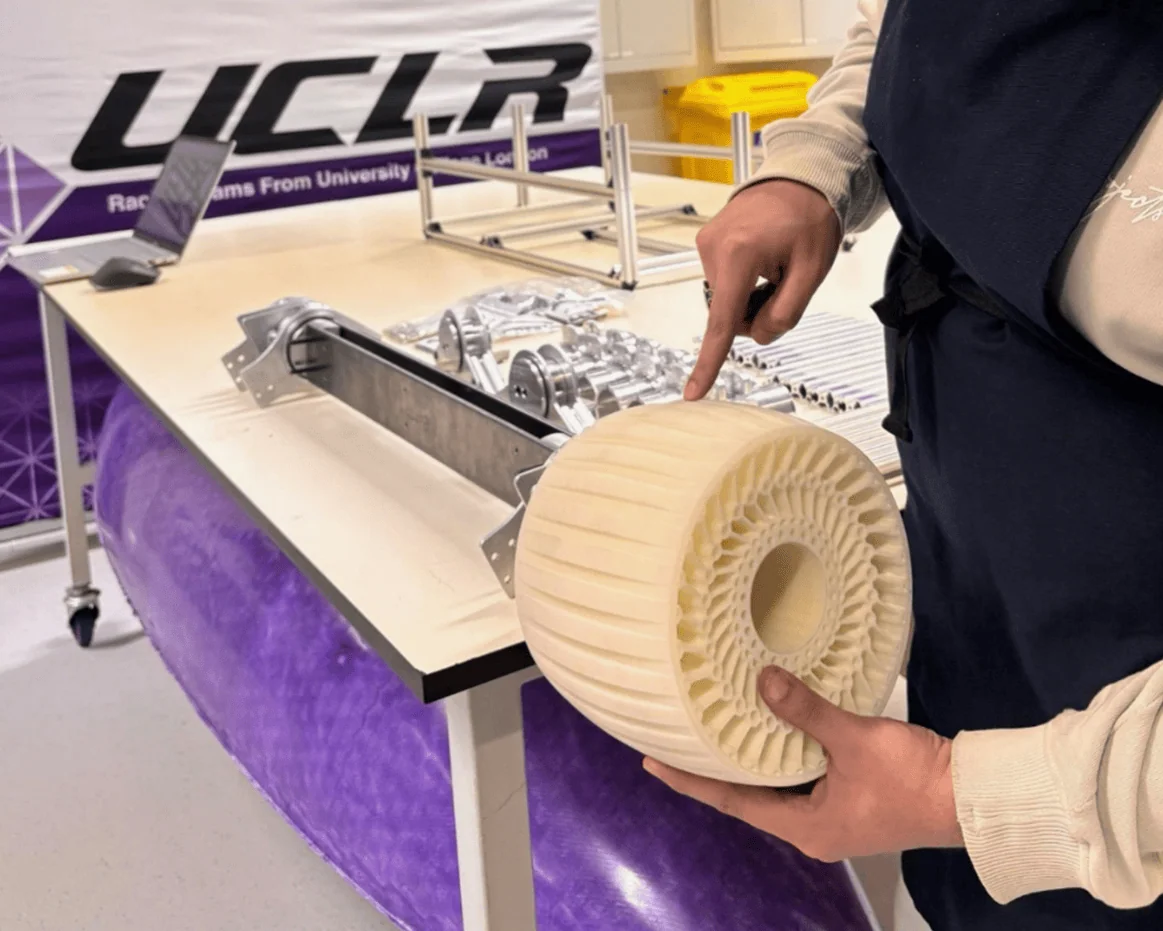
3D printed wheel
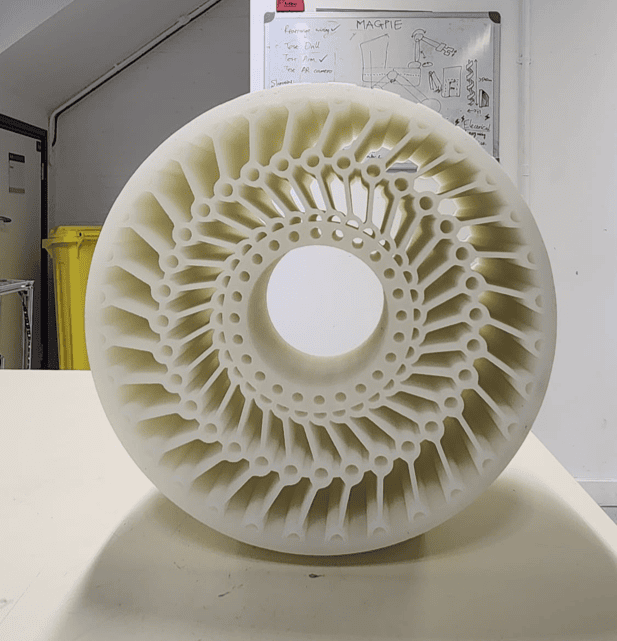
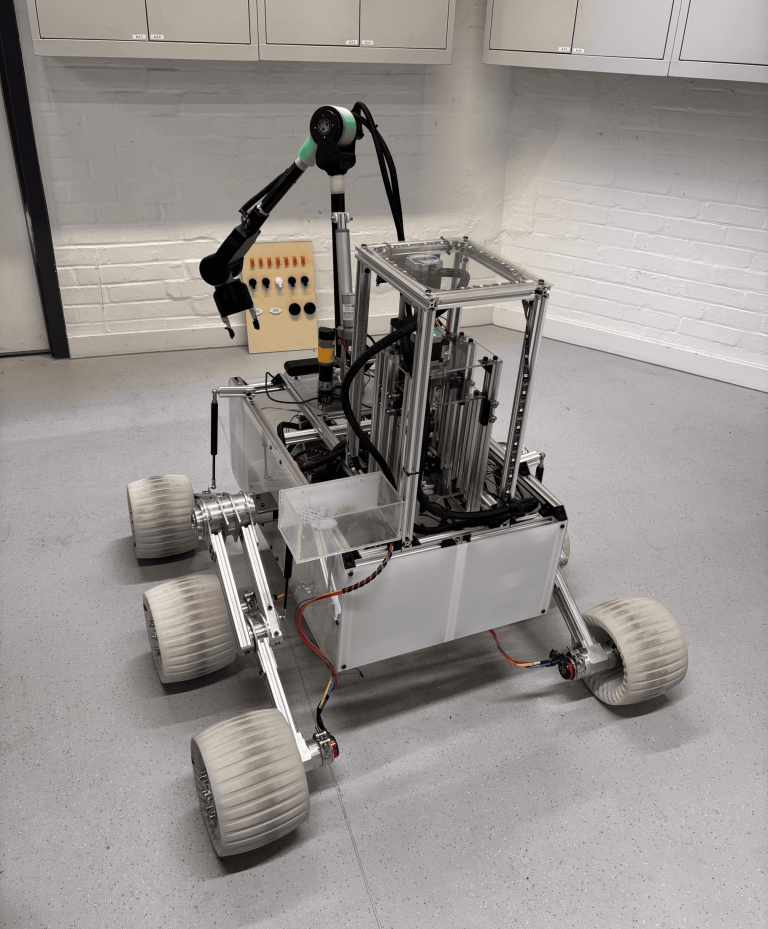
Rover with 3D printed wheel
Engineering Lessons Beyond the Classroom
This project was more than a design exercise—it was a crash course in real-world engineering. Key takeaways:
- Structural symmetry matters: Irregular patterns lead to unpredictable behavior. Adopting proven, radial symmetry principles resulted in a safer and more reliable wheel.
- Tread geometry isn’t just aesthetic: The balance between grip, wear, and manufacturability must be carefully evaluated.
- Shore hardness is critical: Flexibility without structural collapse is a fine line. Material selection can make or break your design.
- Manufacturing constraints must be integrated early: Collaborating with suppliers like Xometry taught us how to design for reality—not just for the screen.
Looking ahead, these wheels will undergo further terrain testing as we prepare for the ERC. But regardless of the competition outcome, we’ve already succeeded in building a component that meets technical requirements, was delivered through professional channels, and taught us lessons most engineers only learn in the field.
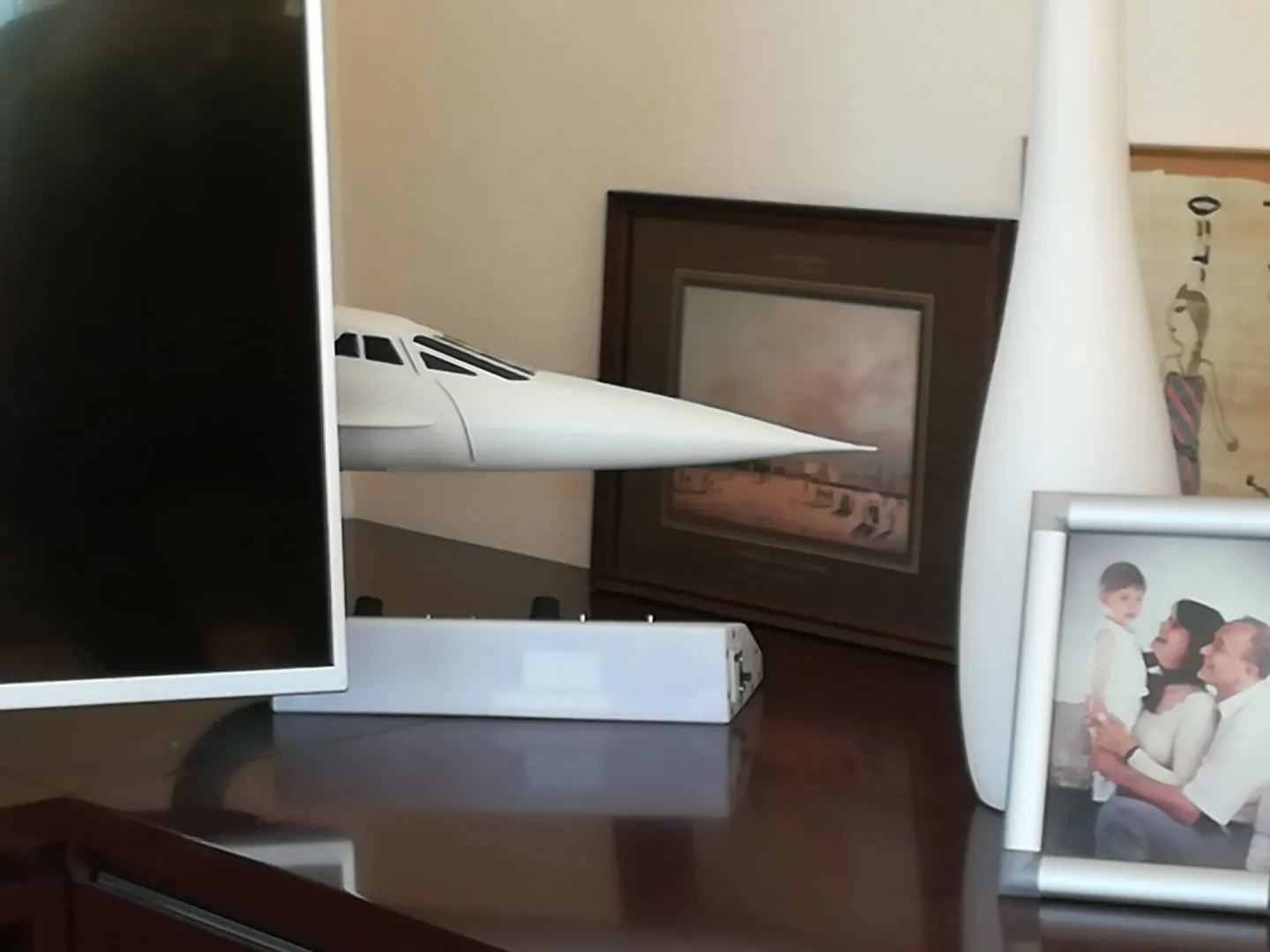

Engineering the Concorde Nose Mechanism: A Tribute to Aerospace Design
Aerospace
3D Printing
Prototyping
Read Story
For the physical prototype, I selected Selective Laser Sintering (SLS) using PA12 nylon. This combination offered the durability and dimensional accuracy I needed, while being light enough to preserve the model’s integrity and strong enough to handle repeated use. I ordered the parts through Xometry’s on-demand manufacturing service, which allowed me to test my designs without investing in a printer or tooling—a crucial advantage when working with small volumes and evolving prototypes.
Read Story
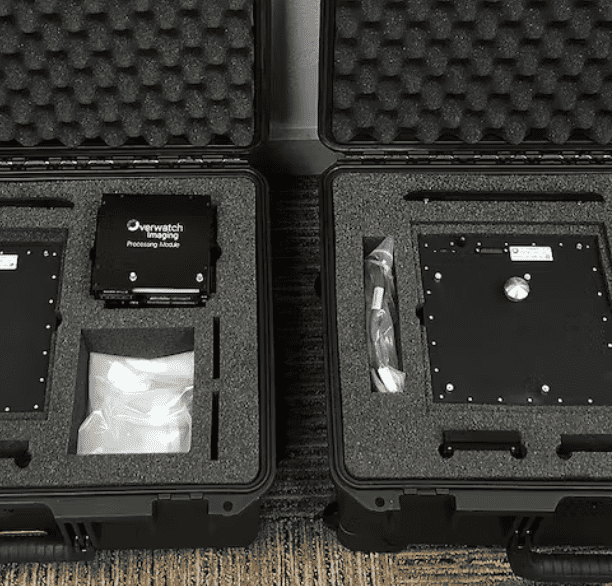

Why Two Entrepreneurs Quit Their Jobs and Launched Their Own Drone Imaging Company
Aerospace
3D Printing
Prototyping, R&D
Read Story
We came up with three different prototypes and then around May we ordered all of the aluminum parts and expensive cameras. For the prototyping, Overwatch relied on two in-house 3D printers and Xometry.
Read Story
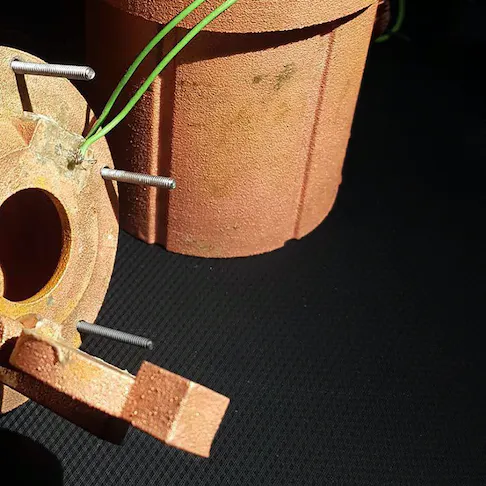
These Students Invented a Way to Brew Beer on the Moon
Aerospace
3D Printing
Prototyping, R&D
Read Story
We used it to fabricate our canister design out of nylon and plated it with copper and nickel to ensure air tightness. In school we’ve all learned how to use 3D printing, but we always use plastics or acrylics, basic materials. Working with Xometry really expanded our horizons when it came to using materials like nylon, copper plating, and nickel. These are materials we’d never worked with before, and that was really cool to see.
Read Story
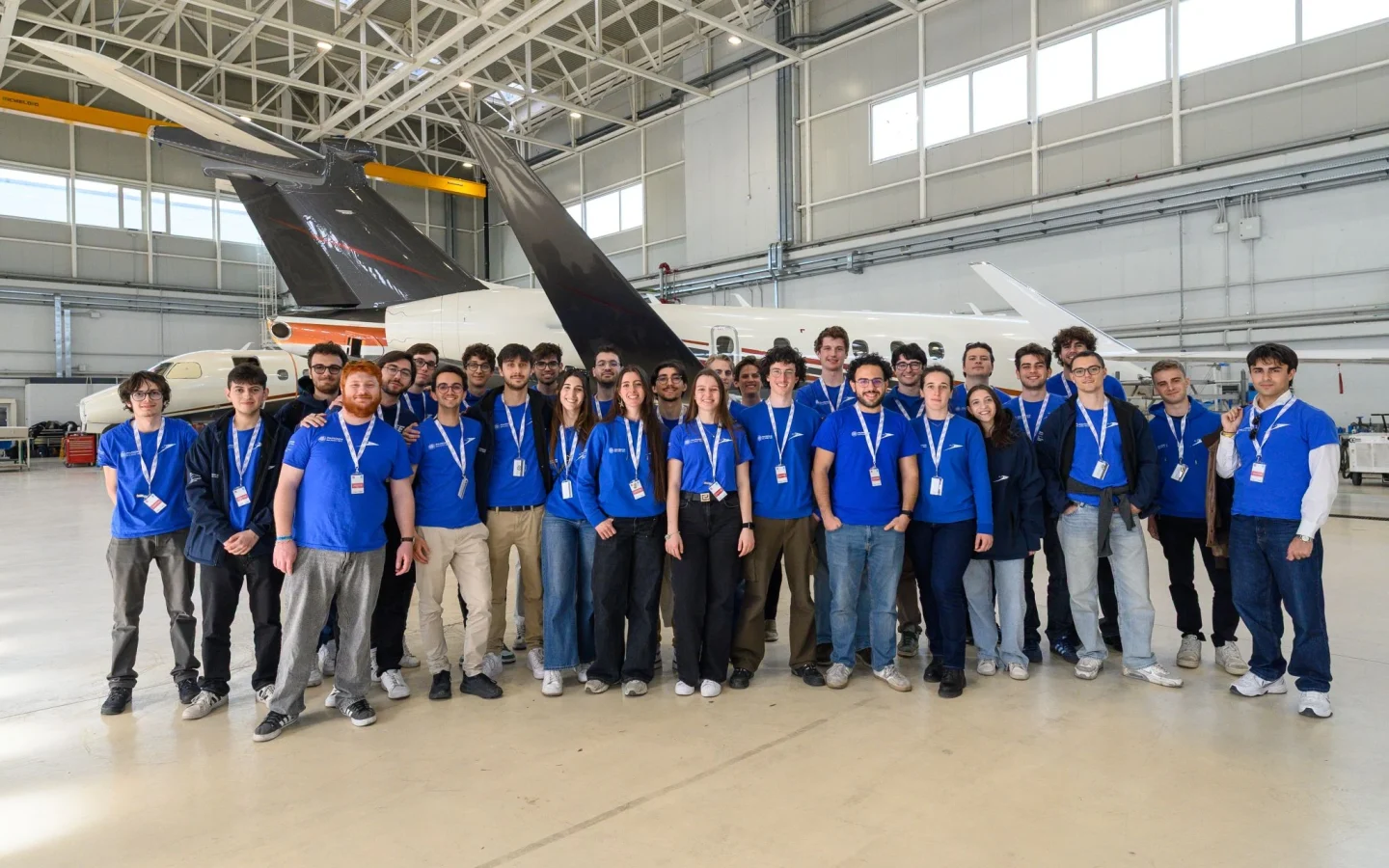
How Fly-Mi Team Prepares a Cargo UAV for the Air Cargo Challenge
Aerospace
CNC Machining
Prototyping
Read Story
Preparing for the 2026 Air Cargo Challenge, the Fly-Mi team is developing Heméra, a fixed-wing UAV designed for maximum payload transport. This project integrates advanced aerodynamics, structural FEM analysis, and precision-engineered aluminum tooling to create a twin-motor aircraft capable of reaching flight speeds of 35 m/s.
Read Story
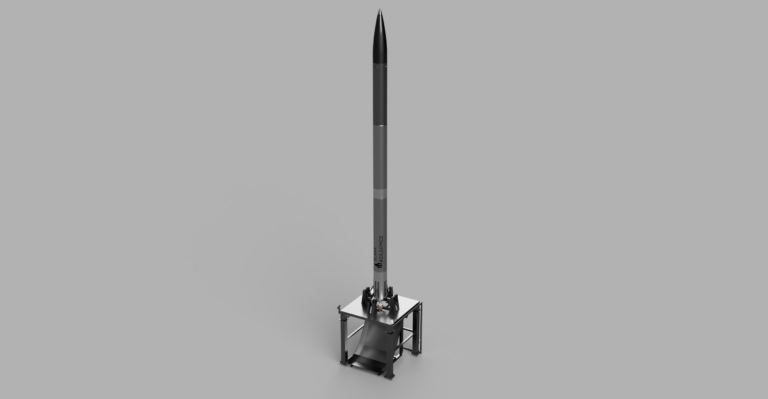

From Tunneling to the Stars – How Elara Aerospace Is Advancing Suborbital Rocket Engineering in Europe
Aerospace
CNC Machining
R&D
Read Story
To turn these components into reality, we required high-precision manufacturing with fast turnaround times. Through Xometry, we produced a brass test chamber for our injector experiments, machined to the specifications needed for our early-stage testing.
Read Story

Xometry Powers AcubeSAT from Prototype to Launch‑Ready Nanosatellite
Aerospace
CNC Machining
R&D
Read Story
At this time, we decisively decided to significantly simplify the design, allowing it to achieve higher precision and tolerance control through machining. During the redesign process, we realized that we needed to find a partner capable of manufacturing high-precision prototype parts—so we chose Xometry.
Read Story

R&D Efficiency Restored: Xometry Ensures Uninterrupted Supply of Critical Precision Parts
Aerospace
CNC Machining
R&D
Read Story
Collaborating with Xometry allows us to concentrate more on our core R&D, saving substantial time and significantly boosting project efficiency.
Read Story
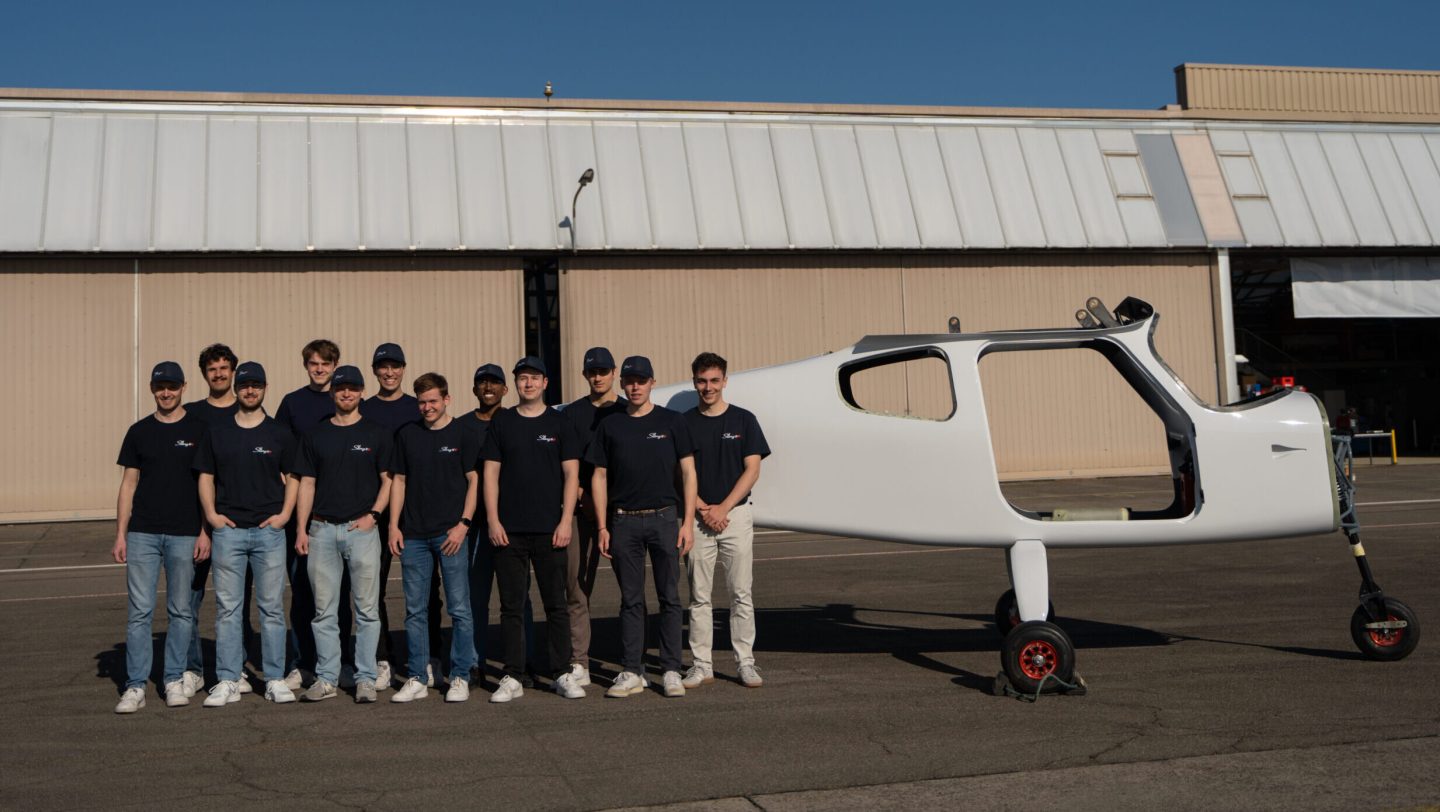

Emission-Free Across the Alps – How Cellsius Is Enabling Hydrogen-Powered Flight
Aerospace
CNC Machining
Prototyping
Read Story
We designed it with maximum strength-to-weight efficiency in mind, combining tight tolerances with complex geometry. Since producing a part this precise was beyond our in-house capabilities, we relied on external manufacturing to bring it to life. Working with Xometry’s digital manufacturing platform proved to be a practical solution. The ordering process was simple, and the part was delivered exactly to spec, which helped us stay on schedule and move forward with system integration.
Read Story
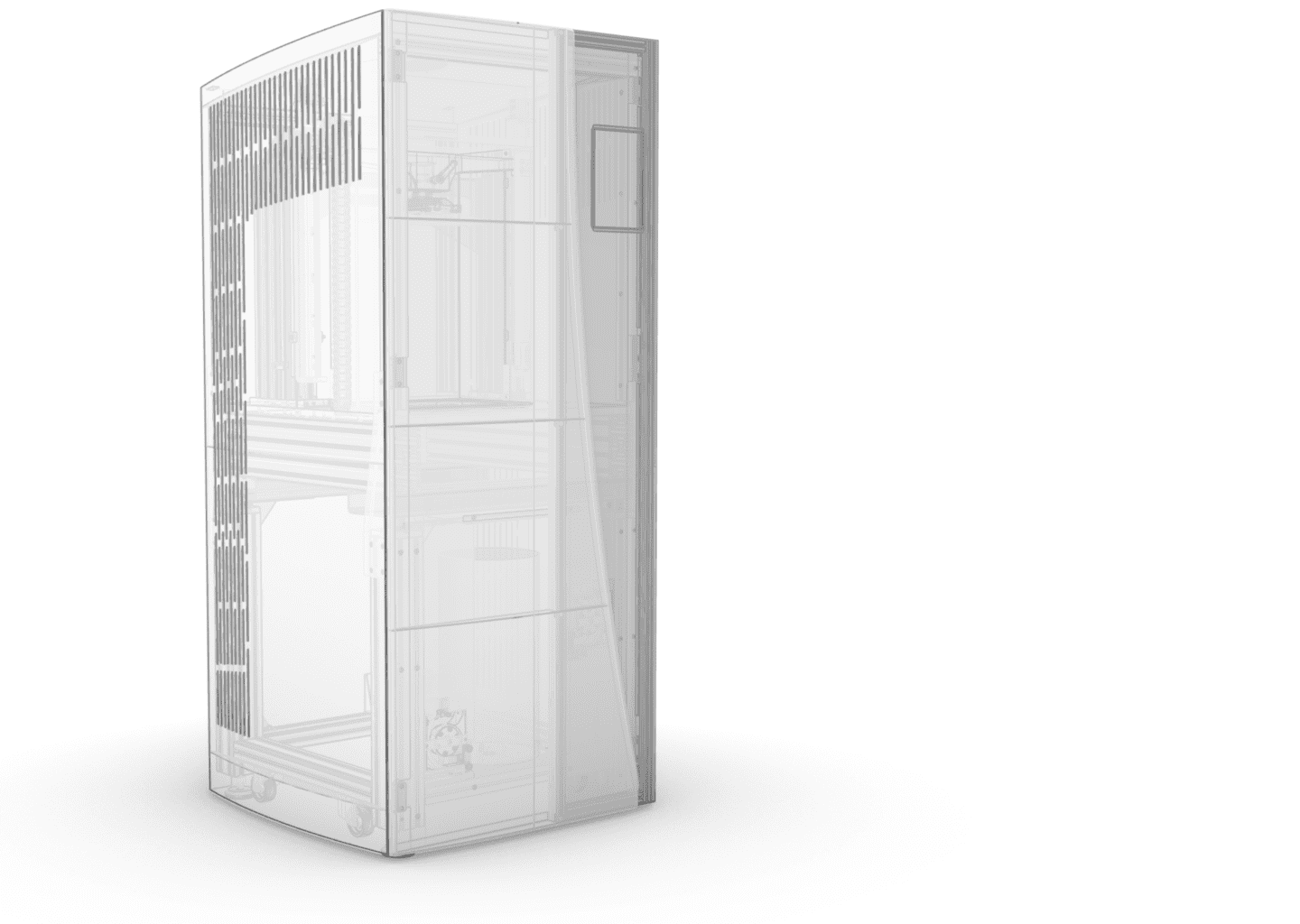
A 3D printer powered by revolutionary Hybrid PhotoSynthesis technology, designed & produced in just 9 months
Aerospace
CNC Machining
Prototyping, R&D
Read Story
We can’t imagine any other partner who could have been able to deliver the parts in time to allow us to launch the product and exhibit it at Formnext.
Read Story
Asylon’s Autonomous Drones Secure the Skies with Help from Xometry
Aerospace
Sheet Metal
Prototyping, High-Volume Manufacturing
Read Story
Xometry has always given us exactly what we needed. We’ve received parts with holes in the right places, with the right finish, and on time. Even having a user-friendly website, with options laid out in a logical way, translates to a faster turnaround time for us.
Read Story
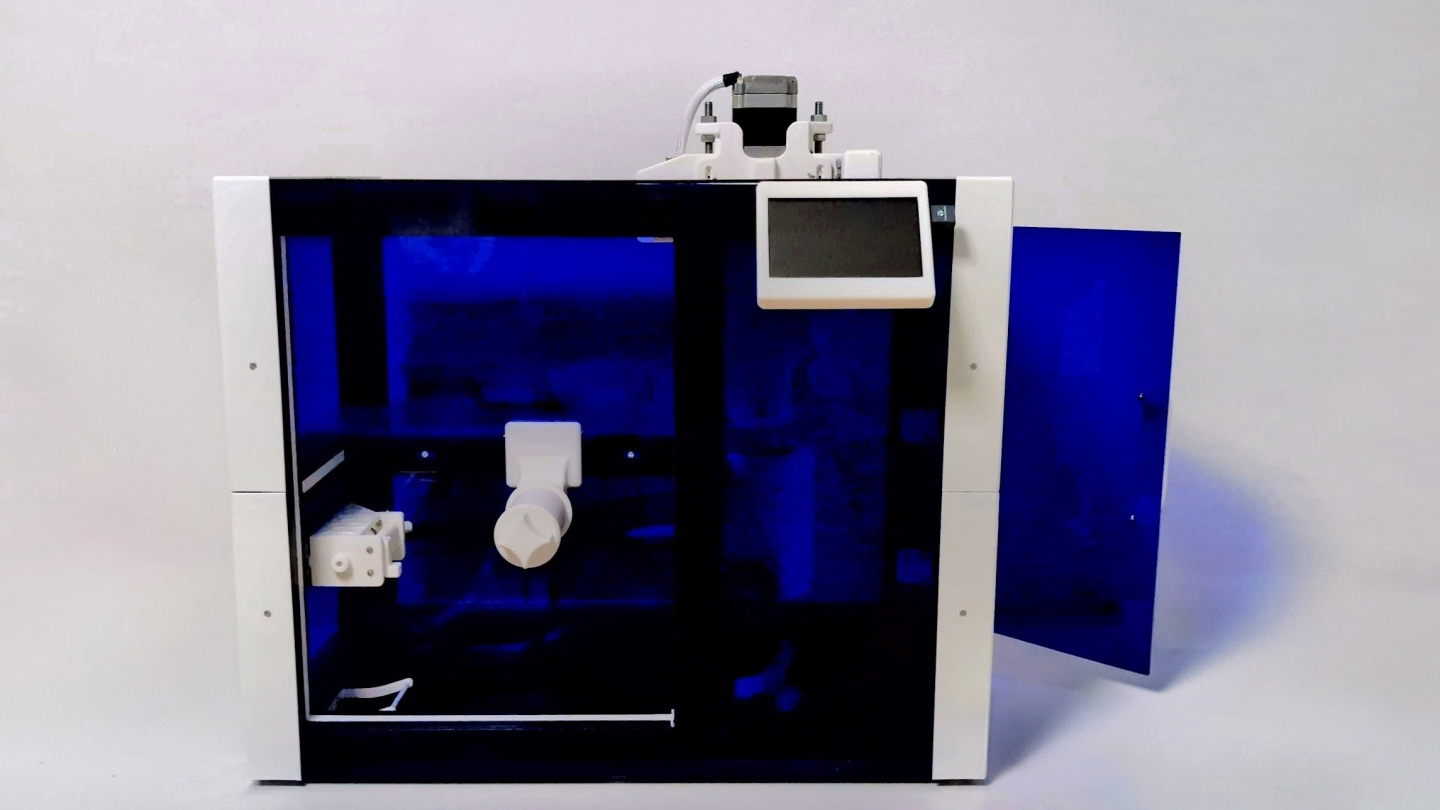

The Rethink of 3D Printing Waste and the Next Chapter of the Desktop Filament Recycler Story
Machine Building
3D Printing
CNC Machining
Prototyping
Read Story
By using agile testing and redesigning a double-sided support to resolve motor deformation and calibration challenges, the TGM student team successfully turned 3D printing waste into high-quality PLA filament.
Read Story
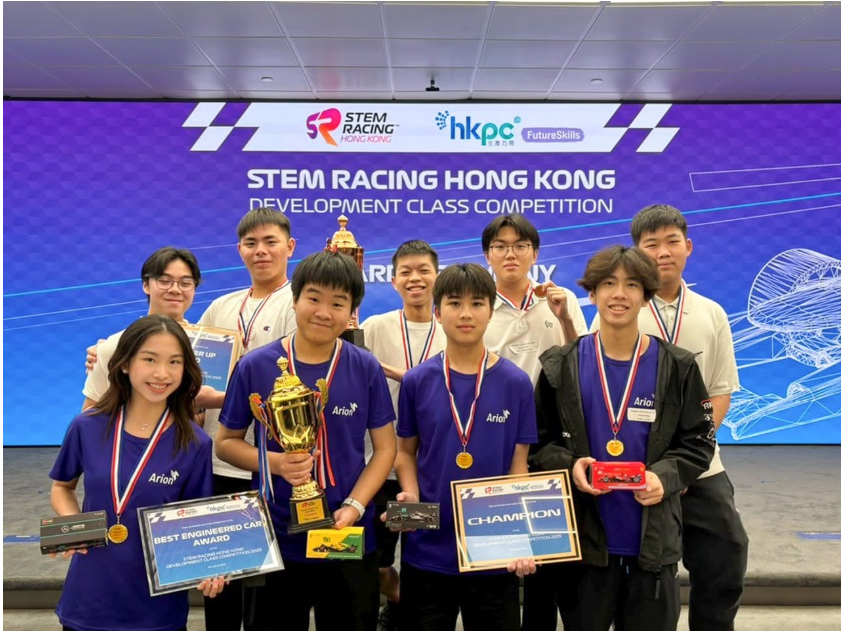

How AI-Powered On-Demand Manufacturing Helps a STEM Racing Team Achieve Faster Iteration and Championship Performance
Automotive
3D Printing
CNC Machining
Sheet Metal
R&D
Read Story
Team Arion, a student racing team from Singapore International School Hong Kong, used Xometry’s AI‑powered on‑demand manufacturing platform to overcome the hurdles of small‑batch, complex parts production, accelerated their design iterations, and went on to win the 2025 STEM Racing championship along with the Best Engineering Design Award.
Read Story